 4G SIM News
If you work with industrial equipment, utility infrastructure, or any IoT deployment that spans more than one country, you have almost certainly dealt with the regional modem problem.
You need twelve routers for a project. Six go to UK sites. Four go to the Netherlands. Two go to an Australian installation. Historically, that meant three different order codes, three separate line items on the purchase order, and three separate firmware configurations to track — even though the hardware was identical apart from the modem inside.
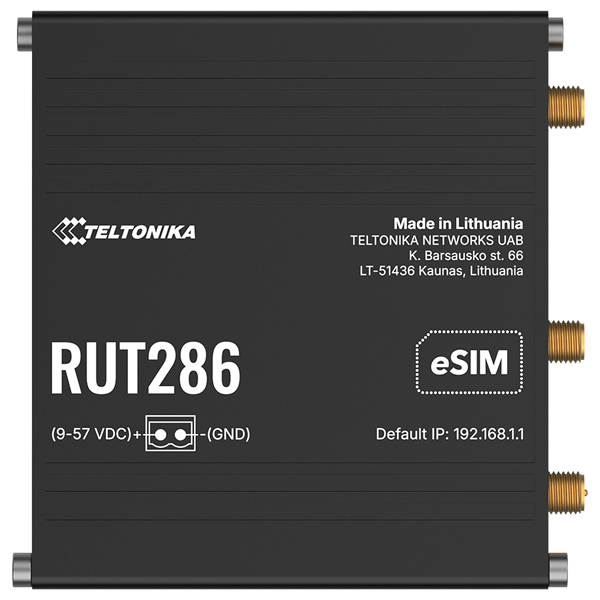
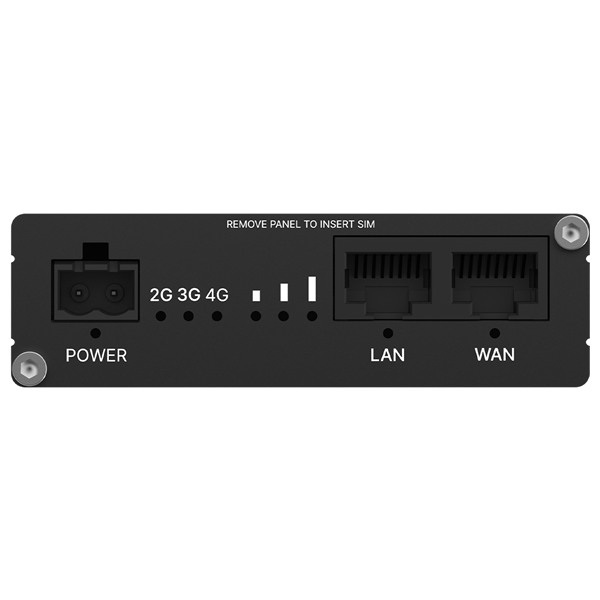
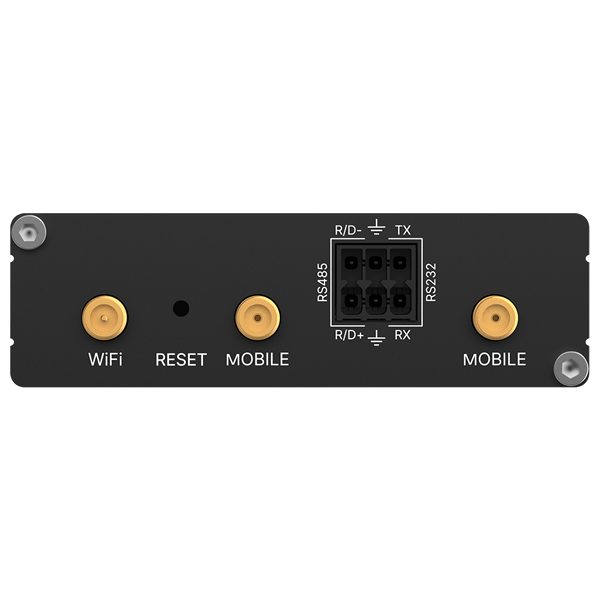
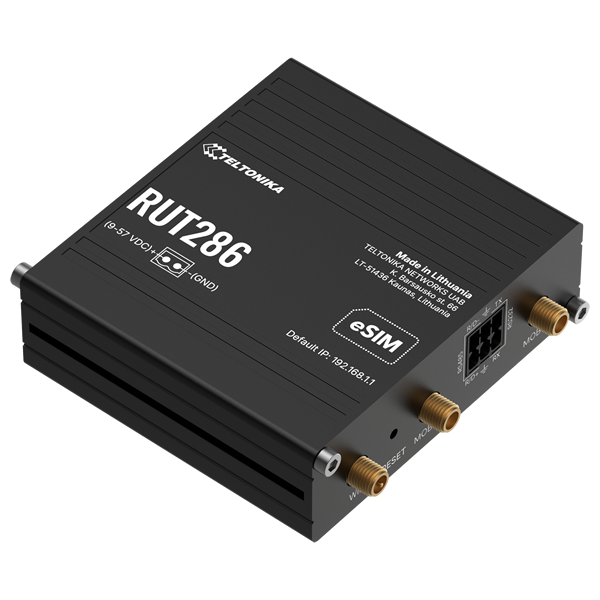
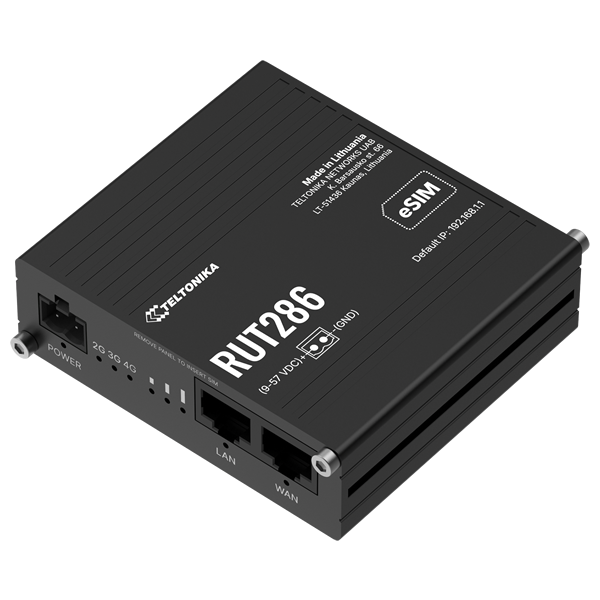
Teltonika have been quietly solving this problem across their LTE Cat 4 range. The new Teltonika RUT286 is the latest example, and it is worth understanding what it does and why the global modem direction matters for anyone buying or specifying these routers.
What is the Teltonika RUT286?
The RUT286 is an industrial LTE Cat 4 router in Teltonika’s compact RUT format — 83 x 25 x 83 mm, 132 grams, anodised aluminium housing. It sits in the same physical form factor as the RUT200 and RUT281, but adds two things neither of those routers has: RS232 and RS485 serial interfaces on a 6-pin terminal block, and a power input range that runs all the way from 9 V to 57 V DC.
Those two additions open up a completely different set of deployment scenarios. RS485 is the interface that connects Modbus RTU meters, DNP3 outstations, DLMS/COSEM smart meters, and BACnet building automation controllers. A 57 V DC input tolerance means the router can run directly from substation battery bus voltages, 48 V DC distribution rails in telecom cabinets, and solar/battery systems without a separate DC-DC converter.
The modem inside is a Telit LTE Cat 4 module. On the global A* hardware variant (order code RUT286AAAAA0), it covers 18 LTE FDD bands — B1, B2, B3, B4, B5, B7, B8, B9, B12, B13, B14, B18, B19, B20, B25, B26, B28 — plus 7 UMTS bands and 4 GSM bands. That covers the core networks in the UK, Europe, the US, Australia, Japan, and across Asia-Pacific. One hardware SKU, one order code, one configuration.
There is also a triple SIM architecture: two Mini SIM (2FF) slots in a double-stacked tray, plus an integrated consumer eSIM that holds up to seven downloadable profiles. Auto-switch between SIMs can be set up in RutOS to trigger on weak signal, data limit, no network, or connection failure.
Why global modems matter for IoT deployments
If you have only ever bought routers for UK sites, the global modem thing might sound like a minor footnote. It is not.
Until recently, Teltonika — like most router manufacturers — shipped regional variants. The European version of a router had a modem tuned for European LTE bands. The North American version had different bands for AT&T, Verizon, and T-Mobile US. The Asia-Pacific version covered B1, B3, B8, and the 700 MHz APT band (B28) used across Australia, New Zealand, and parts of Southeast Asia.
For a UK reseller or integrator managing a project that only ever touches UK sites, this is not a problem. But as soon as a project spans territories — international utility rollouts, multinational retail estate connectivity, global IoT sensor networks, export equipment manufactured in the UK and shipped worldwide — regional variants create real operational headaches.
The practical problems are straightforward. Stock management becomes complex when functionally identical hardware has separate SKUs. A spare unit held in the UK cannot be shipped to replace a failed Australian router without checking the modem variant first. Return material authorisation gets complicated. Firmware builds need to be tracked against hardware variant. And if a project scope changes after initial ordering — a common occurrence — you can end up with the wrong modem for the new sites.
A global modem removes all of that. One order code. One hardware unit. One firmware image. Deploy it anywhere in the covered region. The modem negotiates with whatever network is available.
The global Telit modem in context
The Telit modem Teltonika has adopted for this generation of hardware is not a generic commodity part. It covers the bands that actually matter for production deployments:
Band 20 (800 MHz) and Band 8 (900 MHz) for rural European coverage, where low-frequency propagation matters for buildings, basements, and remote sites.
Band 28 (700 MHz APT) for Australia, New Zealand, and a growing number of Asia-Pacific operators — a band that was absent from most European LTE hardware until recently.
Bands 12, 13, and 14 for North America, covering AT&T rural, Verizon, and US FirstNet public safety networks respectively.
Band 3 (1800 MHz) and Band 7 (2600 MHz) for capacity bands used by EE, Three, and Vodafone in dense UK urban areas.
3GPP Release 10 compliance confirms LTE Cat 4 performance: up to 150 Mbps down, 50 Mbps up on 4G, with UMTS HSPA+ and GSM fallback. For most industrial IoT applications — remote monitoring, SCADA polling, alarm transmission, configuration management — Cat 4 is more than sufficient. The devices being connected rarely push more than a few megabits per second, and the value is in reliability and protocol support, not raw throughput.
The growing Teltonika global modem range
The RUT286 is not a one-off decision. Teltonika have been rolling out the global Telit modem platform across their LTE Cat 4 line throughout 2026. The picture at the time of writing:
The Teltonika RUT281 is the compact entry point — the same 83 x 25 x 74 mm form factor as the original RUT241 it replaces, with one physical Mini SIM plus eSIM, two Ethernet ports, passive PoE input, and digital I/O. The global Telit modem covers the same 18 LTE bands. It is the right choice for space-constrained fixed installations: kiosks, payment terminals, equipment cabinets, and CCTV backhaul. Available now from The Router Store at routerstore.com/product/teltonika-rut281-global-4g-router/.
The Teltonika RUT981 steps up to dual physical SIM plus eSIM, four Ethernet ports (configurable WAN and LAN), 802.11n Wi-Fi with 2×2 MIMO, and the same global modem. It replaces the RUT951 as the mid-range industrial router for branch connectivity, retail, and multi-port industrial deployments. Available at routerstore.com/product/teltonika-rut981-global-4g-router/.
The Teltonika RUT986 is the industrial gateway end of the range — RS232, RS485, GNSS receiver, full digital I/O, Micro SD storage, and the complete suite of industrial protocols including Modbus RTU/TCP, DNP3, DLMS/COSEM, OPC UA, and BACnet, all in the same global hardware. It replaces the RUT956. Available at routerstore.com/product/teltonika-rut986-global-4g-router/.
The Teltonika RUT286 now adds to this set. It is positioned between the RUT281 and the RUT986 — it has the serial interfaces and the wide industrial power input, but without the four-port Ethernet, GNSS, and extended I/O of the RUT986. For applications that need RS232/RS485 and wide voltage tolerance but do not need GNSS or four Ethernet ports, it fills a gap.
The direction of travel is clear. Teltonika are standardising on a global modem platform across the LTE Cat 4 range, simplifying both product management and customer ordering.
PoE on the RUT286: active and passive in the same port
One hardware detail worth calling out is the RUT286’s dual PoE capability. The LAN port supports both active 802.3af PoE input and passive PoE input, but they are not the same thing and are not interchangeable.
Active 802.3af PoE (the standard you will find on most managed switches and PoE injectors) delivers 48 V over the cable and negotiates with the powered device. The RUT286 accepts this standard on its LAN port.
Passive PoE is a simpler arrangement — voltage is applied directly without negotiation. The RUT286 accepts 16-57 V DC in passive mode via Mode A/B on all four pairs. A matched 24 V or 48 V passive PoE injector wired from the panel supply works cleanly. What you must not do is connect a 48 V 802.3af switch port and expect passive PoE behaviour — the voltage is similar but the delivery mechanism is different, and mixing them up risks damaging the powered equipment.
For panel installations where a single Ethernet cable can carry both power and data from a managed switch to the router, 802.3af active PoE is the cleanest option. For installations where a simpler passive injector is already present on the panel supply, passive PoE keeps the installation straightforward without requiring a standards-compliant PSE.
SIM cards for global deployments with the RUT286
A globally capable modem only delivers its value if the SIM matches. There are a few options worth considering for multi-country deployments:
A multi-network IoT SIM covers UK operators and roams onto European and international networks from a single card. This suits deployments where the primary use case is UK or European connectivity, with international coverage as a secondary requirement.
A dedicated IoT eSIM profile downloaded to the RUT286’s integrated eSIM slot can be tailored to the specific networks available in the deployment country. The eSIM supports up to seven profiles, so a single hardware unit can carry profiles for multiple territories and switch between them as needed.
For deployments in the UK where the router needs a static IP address — for VPN remote access, direct SCADA polling, or CCTV monitoring — a fixed IP SIM from The Router Store gives you a permanent, routable IP on EE or a multi-network platform. Standard SIM cards sit behind carrier-grade NAT, which prevents inbound connections without additional tunnelling setup.
The Router Store supplies IoT SIM cards alongside routers, so you can configure the full connectivity solution from a single order.
Where to buy
The Teltonika RUT286 is available from The Router Store (routerstore.com), which is a Teltonika Diamond Partner holding UK stock. The standard order code is RUT286AAAAA0, which is the global variant without a PSU — suitable for installations using the 9-57 V DC power connector or PoE input.
The wider Teltonika global LTE range at The Router Store includes the RUT281, RUT981, and RUT986, all available from UK stock with next-working-day delivery.
For technical queries on the RUT286 or the wider Teltonika global range, The Router Store can be reached on 0300 124 6181 or at sales@routerstore.com.