 4G SIM News
Most industrial routers are built around the assumption that size is a trade-off you make when you need serial ports, digital I/O, and reliable cellular. The Milesight UR41 and UR41L challenge that. At 70 x 55 x 22 mm and 103 g, these are routers you can hold in one hand while the other connects an RS485 cable to a Modbus RTU device. This post covers what both models do, where they differ, which applications they suit, and why the power consumption figures matter more than they might initially appear.
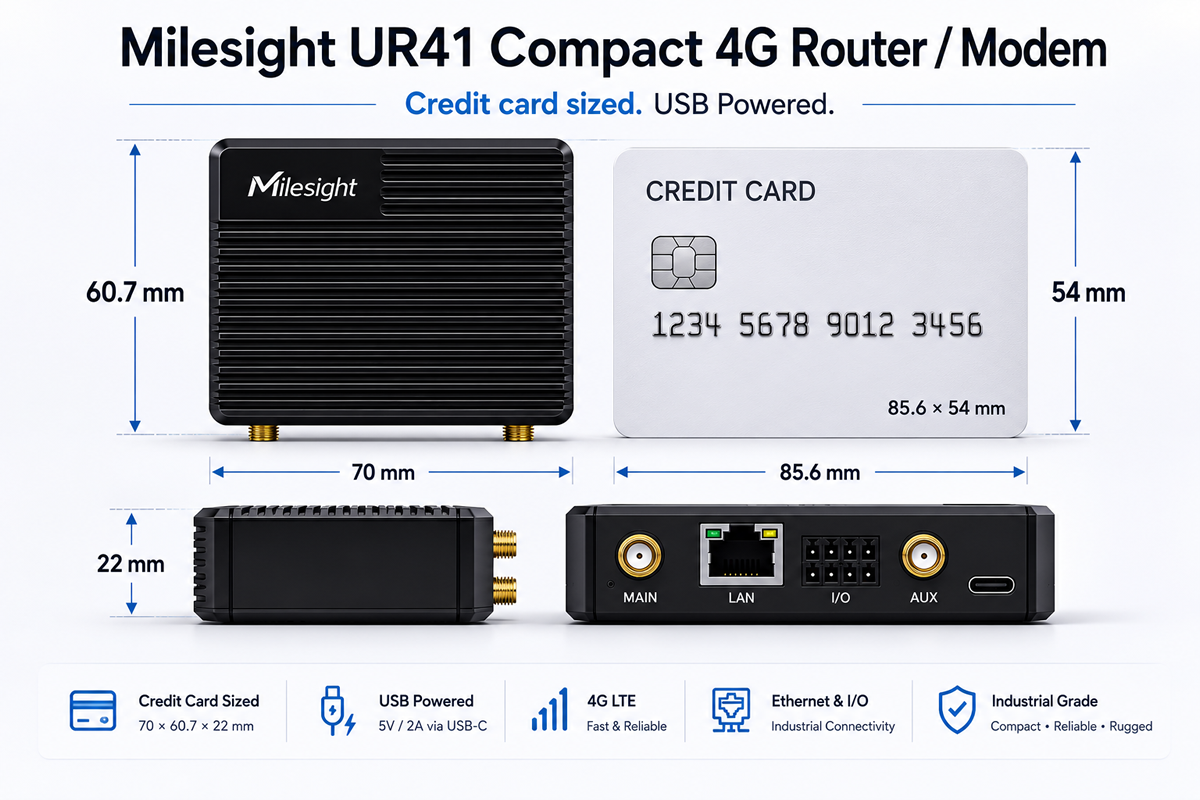
What are the Milesight UR41 and UR41L?
The UR41 and UR41L are mini industrial routers from Milesight, built for M2M and IoT deployments where space is tight and serial device connectivity is non-negotiable. Both sit in the same metal IP30 enclosure, run the same firmware, and share the same processor, memory, serial port, digital I/O, and management platform. The differences are in the cellular module — and for the UR41, the addition of GPS/GNSS.
They are not consumer or SOHO routers in a smaller box. The enclosure is metal. The operating range is -40 to +60 °C. The power input accepts 5-24 V DC on a screw terminal, or 5 V via USB Type-C. There is a hardware watchdog. There are galvanically isolated digital inputs and outputs. These are the features that matter in a panel, cabinet, or machine installation — not headline Wi-Fi speeds, because neither model has Wi-Fi.
UR41 vs UR41L: the key differences
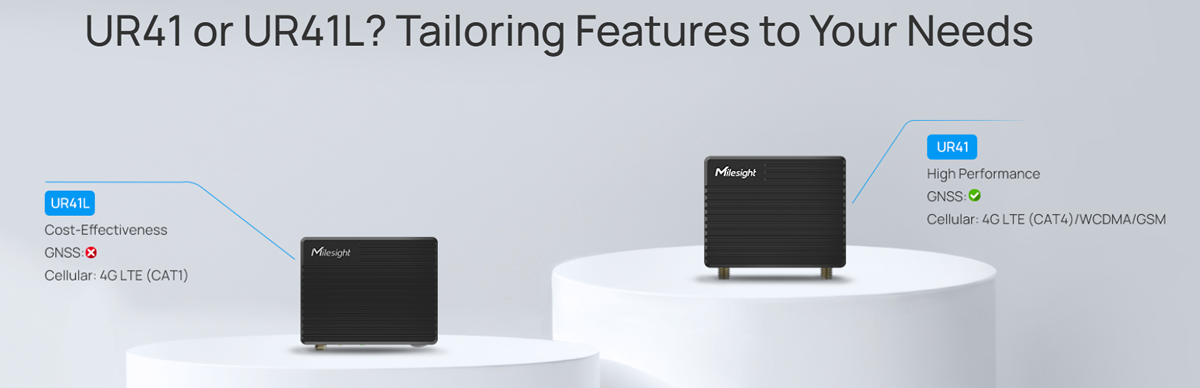
The two models share a chassis and feature set but use different cellular modules. Here is what that means in practice.
| Feature | UR41 (UR41-L08EU) | UR41L (UR41L-L0CEU) |
|---|---|---|
| Cellular standard | 4G LTE Cat 4 | 4G LTE Cat 1 |
| Max download | 150 Mbps | ~10 Mbps |
| Max upload | 50 Mbps | ~5 Mbps |
| 3G / 2G fallback | Yes | No |
| GPS / GNSS | Yes – GPS, GLONASS, BeiDou, Galileo, QZSS | No |
| Certifications | CE, FCC, RoHS | CE, RoHS |
| Idle power at 12 V | 70 mA | 78 mA |
| Data link power at 12 V | 157 mA | 226 mA |
| Price (ex VAT) | £119.00 | £119.00 |
Both are priced at £119.00 ex VAT. For deployments where GPS positioning adds operational value, or where 3G/2G fallback matters for coverage resilience, the UR41 is the stronger choice. For purely fixed, cost-sensitive M2M applications where 10 Mbps is sufficient and positioning is irrelevant, the UR41L does the same job on the same budget.
Hardware overview
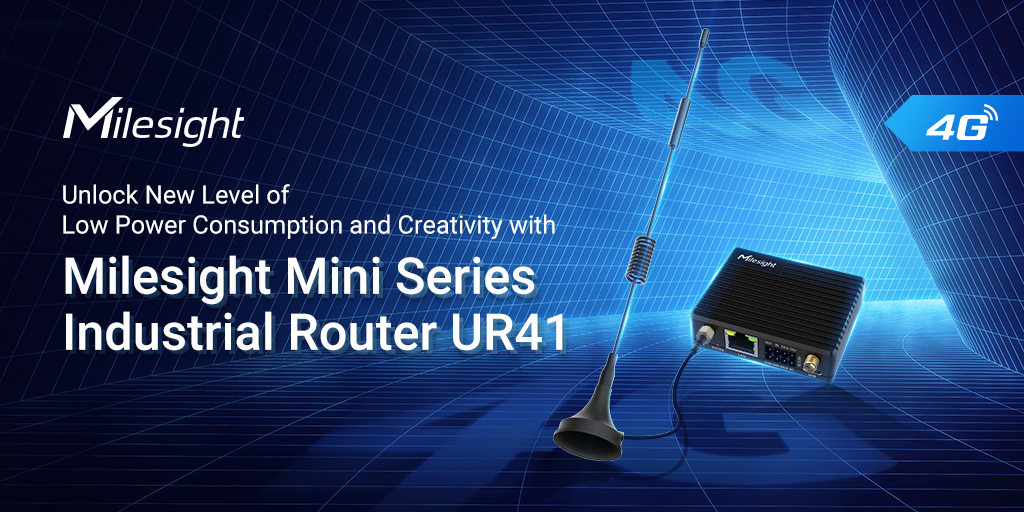
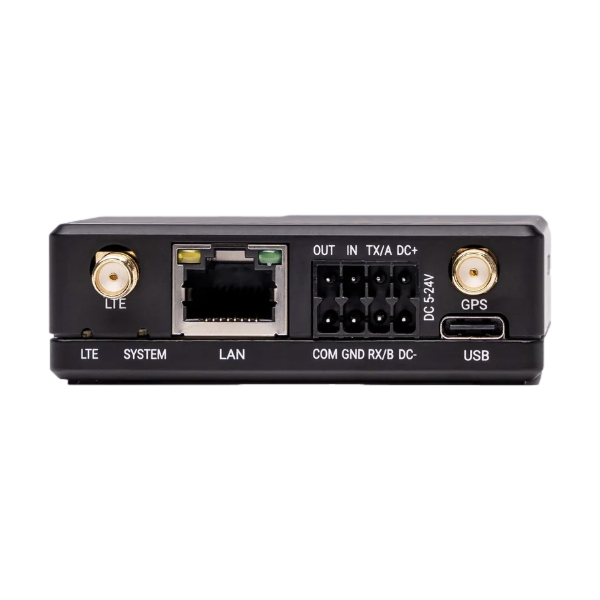
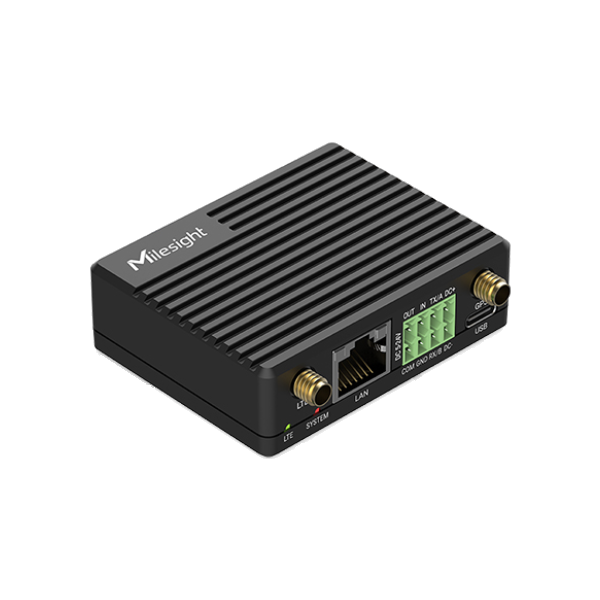
Both models carry the following on the same 70 x 55 x 22 mm footprint:
- 1 x SMA cellular antenna connector (50 Ω, centre pin female)
- 1 x RJ45 Ethernet, 10/100 Mbps LAN, 1.5 kV RMS isolation
- 1 x serial port – RS232 or RS485, software switchable, 3.5 mm terminal block, 300 bps to 230400 bps
- 1 x DI + 1 x DO, galvanically isolated, on the 8-pin terminal block
- 1 x USB Type-C, USB 2.0, power input or debug
- 1 x Nano SIM slot (4FF)
- 2-pin power terminal, 5-24 V DC, surge and reverse polarity protected
- Hardware watchdog, LED indicators (SYSTEM, SIM), reset button
The UR41 adds a second SMA connector for the GPS/GNSS antenna on the top panel. The UR41L does not have this port.
ARM Cortex-A7 at 528 MHz with 128 MB DDR3 RAM and 128 MB flash handles the firmware, VPN tunnels, serial processing, and management stack without issue. This is the same processor platform used across the broader Milesight industrial router range.
Power consumption in detail
The power figures from the Milesight datasheet deserve more than a row in a spec table. They are the reason these routers work in applications where most others do not.
At 12 V, the UR41 draws:
- Standby: 6.3 mA – the router is powered but the modem is in its lowest power state
- Idle: 70 mA – the modem is registered on the network but not transferring data
- Data link: 157 mA – active data transfer in progress
The UR41L draws 6.3 mA in standby (identical), 78 mA idle, and 226 mA under data link. The Cat 1 module draws more current during active transmission, which is a known characteristic of Cat 1 modules compared to Cat 4. In deployments where the router is transmitting data most of the time, the UR41 is actually the lower-power option at 157 mA vs 226 mA.
What this means for battery and solar-powered deployments
The UR41 and UR41L both support standby mode with wake-up by schedule, SMS, or digital input. A router that sleeps at 6.3 mA at 12 V and wakes every 15 minutes to send a Modbus poll result draws an average of well under 20 mA across a full day — depending on how long the active window runs and network registration time.
On a 12 V 7 Ah sealed lead-acid battery with no charging, that gives roughly two weeks of autonomous operation. Add a small solar panel — 10-20 W is sufficient at UK latitudes for most of the year — and the site runs indefinitely. This is not theoretical; it is the architecture used for remote environmental monitoring, agricultural telemetry, water treatment outstation monitoring, and similar applications where mains power is not available and a mobile generator is not viable.
The power management settings (standby/idle modes, wake schedule, DI wake trigger) are configured under System > Power Management in the web interface.
Serial connectivity and industrial protocols
The single serial port on both models switches between RS232 and RS485 in the web interface — no hardware jumpers, no opening the enclosure. The supported serial modes cover the protocols that matter in real deployments:
- Modbus RTU client – poll Modbus slave devices over RS485 or RS232
- Modbus TCP client – connect to Modbus TCP servers over Ethernet or cellular
- Modbus gateway – bridge RS485 Modbus RTU slaves to a Modbus TCP SCADA head-end
- DLMS/COSEM client – communicate with IEC 62056-compliant electricity and gas meters directly over RS232 or RS485
- Transparent serial – TCP client/server, UDP server, or MQTT client for raw serial forwarding
The 120 Ω RS485 termination resistor is a physical switch on the device — no need to wire an external resistor at the end of a long RS485 run.
The digital I/O adds a further layer. The DI (dry contact) can trigger email alerts, SMS messages, CLI commands, Modbus writes, or MQTT publishes when its state changes. The DO (wet contact, max 0.3 A at 30 V DC) can be driven from DI state, SMS, CLI, Modbus, or MQTT. Galvanic isolation on both protects the router from the ground loops and transients common in industrial environments.
Use cases
Smart metering and DLMS/COSEM
The native DLMS/COSEM client mode makes the UR41 and UR41L a direct fit for electricity and gas meter head-end communications. Meters communicating over IEC 62056 on RS232 or RS485 connect without a protocol converter. Data forwards upstream via MQTT or HTTPS to Azure IoT Hub, AWS IoT Core, or a SCADA system. Both models handle the data volumes involved in scheduled meter reads comfortably.
Remote substation and grid monitoring
Protection relays, RTUs, and PLCs at distribution substations use Modbus RTU or Modbus TCP to expose measurements and status. The UR41 or UR41L bridges that data to a SCADA head-end over cellular VPN. The DI monitors door contact or alarm relay status. For time-stamped event correlation across distributed substations, the UR41’s GPS provides an accurate time reference.
Vending machines and unattended retail
The UR41 series was developed partly for vending machine connectivity — a use case that demands RS232 to the vend controller, remote reboot via SMS, low standby power, and a footprint that fits inside the machine. The USB Type-C input suits machines where only a USB supply is available. Both models work here; the UR41L is typically preferred on cost grounds where GPS is not required.
Vehicle and mobile IoT
The UR41’s GPS/GNSS support makes it the correct choice for vehicle-mounted or portable applications. Position data transmits via MQTT or TCP alongside RS485 sensor or equipment data. The 12 V vehicle supply connects directly to the DC terminal block. GLONASS and BeiDou support alongside GPS gives better acquisition in urban canyons and areas with obstructed sky view.
Solar and battery-powered remote monitoring
Water treatment outstations, environmental sensors, agricultural monitoring points, and remote infrastructure sites where mains power is absent. The standby power figures and wake-on-schedule capability are the enabling specifications here. Both models work; the UR41 suits sites that benefit from GPS time-stamping of logged data.
Building automation and BMS integration
Building management systems using Modbus RTU over RS485 connect to the serial port. The Modbus gateway mode bridges RTU to TCP for cloud-based BMS platforms. The compact enclosure fits standard DIN rail panels without taking significant space in an already-crowded electrical cabinet.
Remote management: DeviceHub and MilesightVPN
Both models support Milesight DeviceHub, a cloud-based management platform that provides status monitoring, bulk configuration, remote firmware updates, and alert management across multiple devices from a single dashboard. For deployments of more than a handful of units, DeviceHub is the difference between manageable and unmanageable.
MilesightVPN gives engineers direct secure tunnel access to devices and equipment connected behind routers in the field — the PLC, the meter, the RTU — without needing a public IP on every site. Combined with a fixed IP SIM, inbound access is stable and reliable from day one.
TR-069, SNMP v1/v2c/v3 with traps, and SMS management (reboot, output trigger, status query) round out the management options for integration with existing OSS/BSS platforms.
VPN support
Both models carry a full VPN suite: IPsec (multiple clients and server), OpenVPN (multiple clients and server), WireGuard, GRE, L2TP (client), PPTP (client), DMVPN spoke, and ZeroTier. For IoT deployments, WireGuard is increasingly the preferred choice — lightweight, fast to establish, and straightforward to configure. For integration with existing enterprise VPN infrastructure, IPsec IKEv2 is well-supported.
Full specification summary
| Specification | UR41 (UR41-L08EU) | UR41L (UR41L-L0CEU) |
|---|---|---|
| Cellular | 4G LTE Cat 4 / 3G / 2G | 4G LTE Cat 1 only |
| GPS / GNSS | GPS, GLONASS, BeiDou, Galileo, QZSS | None |
| Ethernet | 1 x RJ45, 10/100 Mbps, 1.5 kV isolated | |
| Serial port | 1 x RS232 or RS485 (switchable), 3.5 mm terminal | |
| Digital I/O | 1 x DI (dry contact) + 1 x DO (0.3 A / 30 V DC), galvanic isolation | |
| USB | 1 x USB 2.0 Type-C (power / debug) | |
| SIM | 1 x Nano SIM (4FF) | |
| CPU | ARM Cortex-A7, 528 MHz | |
| RAM / Flash | 128 MB DDR3 / 128 MB | |
| Power input | 5-24 V DC (terminal block) or 5 V USB Type-C | |
| Standby draw | 6.3 mA at 12 V | |
| Idle draw | 70 mA at 12 V | 78 mA at 12 V |
| Data link draw | 157 mA at 12 V | 226 mA at 12 V |
| Enclosure | Metal, IP30, -40 to +60 °C | |
| Dimensions | 70 x 55 x 22 mm (antenna excluded) | |
| Weight | 103 g | |
| Mounting | Desktop, wall, DIN rail | |
| Certifications | CE, FCC, RoHS | CE, RoHS |
| VPN | IPsec, OpenVPN, WireGuard, GRE, L2TP, PPTP, DMVPN, ZeroTier | |
| Management | DeviceHub, MilesightVPN, SNMP, TR-069, SMS, web GUI, CLI | |
| Serial protocols | Modbus RTU/TCP, Modbus gateway, DLMS client, transparent TCP/UDP/MQTT | |
| Cloud IoT | AWS IoT Core, Azure IoT Hub | |
Which model to choose?
If your deployment involves vehicle tracking, position-stamped data logging, or an application where knowing where the device is matters operationally — choose the UR41 (Cat 4 with GPS). If 3G/2G fallback is important for your coverage area, the UR41 is again the right answer.
If it is a fixed site, the data volumes are modest, GPS is irrelevant, and you want the simplest possible bill of materials — the UR41L (Cat 1) does everything the UR41 does in the same enclosure at the same price. The only meaningful operational difference for a fixed metering or SCADA installation is the absence of GPS and 3G/2G fallback.
Both are available now from The Router Store with next-working-day delivery on orders placed before 3:00 PM. UK-based technical support is available on 0300 124 6181.